Beyond Asset Connectivity: Engineering Operational Context for Industrial AI Realization
Connecting industrial machines and gathering raw IoT sensor data often fails to produce measurable business value when organizations prioritize technology adoption over contextual intelligence. Data volume without operational context—such as historical baseline behavior, environmental conditions, and specific performance goals—creates noise rather than actionable clarity. Driven by an integrated approach across physical infrastructure, cloud platforms, and AI systems, successful industrial transformation shifts operations from reactive maintenance toward predictive analytics, dynamic energy optimization, and automated corrective actions.
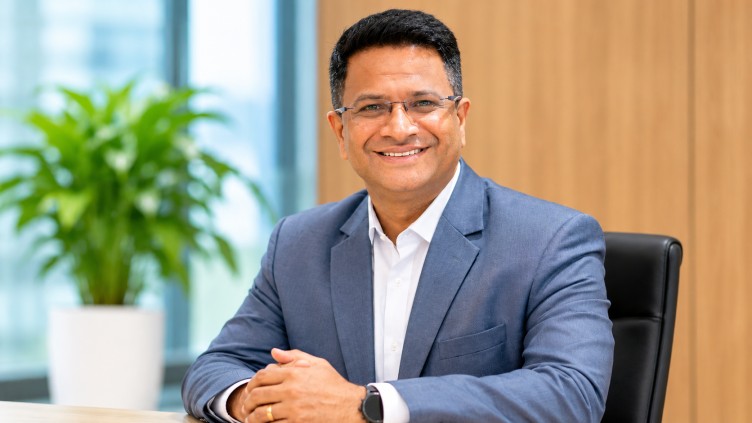
Optimizing existing legacy assets while ensuring strict enterprise data ownership allows facility leaders to improve equipment performance and streamline energy consumption without incurring unnecessary capital costs. By prioritizing open standards, interoperability, and targeted business outcomes over complete equipment replacement, industrial organizations build long-term operational resilience and sustainable efficiency. “The smartest transformation is often the one that makes what you already own work harder, not the one that sends it to the scrapyard,” said Sachin Deshmukh, CEO & Managing Director at Softdel (UNIDEL Group).
Q1. Industries have spent years connecting machines, sensors and assets to generate more data. Why has this not always translated into better intelligence or measurable business value? Where do you see organisations getting the equation wrong?
Sachin: Connecting machines is the easy part. The harder part is context. A machine running hotter than usual may signal a problem, but without understanding its operating conditions, historical behaviour and performance, that reading alone tells you very little. Data without context is just noise.
Organisations often get the equation wrong by investing in technology before defining the business problem they want to solve. At Softdel, our 25 years of IoT and domain expertise have taught us to start with the desired outcome, whether that is higher uptime, lower energy consumption or reduced maintenance costs, and work backwards to identify the data and intelligence needed to achieve it. Intelligence comes from relevance, not volume.
Q2. As AI moves deeper into industrial environments, how do you see the convergence of AI, IoT, cloud and engineering changing the way physical industries operate? What will fundamentally look different over the next 3–5 years?
Sachin: Industrial systems are moving from reporting what happened to anticipating what will happen and, increasingly, acting on that intelligence. Each technology plays a distinct role: IoT connects equipment, cloud platforms bring data together across systems, AI identifies patterns people may miss and predicts outcomes, while engineering integrates these capabilities into real operating environments.
Over the next three to five years, I expect a shift from simply predicting equipment failures to recommending and, where appropriate, automating corrective actions. The real differentiator will not be access to the most advanced AI, but the ability to engineer it into everyday operations so that insights are reliable, operators trust them and decisions lead to measurable outcomes.
Q3. Industrial transformation is often approached through individual technology initiatives such as IoT, AI, automation or cloud. Why is an integrated approach across physical infrastructure, data and intelligence becoming increasingly important?
Sachin: A factory or a building does not operate as a collection of separate technology projects. Equipment, control systems, software and data must work together. Even sophisticated analytics cannot deliver their full potential if the underlying systems are disconnected or the data is unreliable.
At Softdel, we bring these elements together to address operational challenges at scale. For instance, we built a platform for a customer to monitor 50,000 industrial assets across North America. Such deployments demonstrate why integration matters. It is not simply about connecting technologies, but about making complex industrial environments more visible, manageable and efficient.
Q4. As factories, buildings and energy infrastructure become increasingly connected, industrial data is emerging as a strategic asset. Who should ultimately own and control this data, and what implications does this have for enterprises and technology providers?
Sachin: My view is simple: enterprises should own and control the operational data their assets generate, including how it is accessed and used, subject to applicable legal and contractual requirements. Technology providers should help customers operate more effectively, not lock them into a particular platform.
Industrial equipment often remains operational for decades, while software and platforms evolve much faster. Enterprises need the freedom to adopt new technologies, integrate different systems and move between platforms without losing access to their operational data. This is why open standards, interoperability and data portability matter. Ultimately, technology providers earn lasting trust by creating value for customers while preserving their control and freedom of choice.
Q5. Energy is becoming one of the most important dimensions of industrial transformation, particularly as organisations balance efficiency, sustainability and increasing digital workloads. How do you see smart energy and connected infrastructure evolving together?
Sachin: Energy efficiency and equipment performance are becoming inseparable. When you understand how equipment operates, when it consumes energy and where inefficiencies occur, you can make far better decisions about how it should run. We are seeing customers look at energy optimisation alongside maintenance and asset performance, rather than treating it as a separate initiative.
As infrastructure becomes more connected, the opportunity is to use operational data to optimise energy consumption in line with actual demand and operating conditions, reducing costs while improving efficiency and sustainability. At Softdel, smart energy has been a focus for around six years, complementing our work in smart buildings and industrial automation. We see these domains increasingly converging as enterprises seek to optimise the performance of their infrastructure as a whole.
Q6. From your experience of working across industrial automation, smart spaces and smart energy, what is one misconception about ‘digital transformation’ that you believe businesses need to rethink today?
Sachin: The biggest misconception is that digital transformation means replacing existing equipment with newer technology. Industrial assets are built to last, and many have years of useful life remaining. The real challenge is connecting them, making their data usable and getting different systems to work together.
I do not think customers should replace perfectly functional equipment just to adopt AI. We should first understand what they want to improve, then decide what truly needs to change. The smartest transformation is often the one that makes what you already own work harder, not the one that sends it to the scrapyard.
Source: https://cxotoday.com/